

Tuber rufum Pico
Melethemata inauguralia. De fungorum generatione et propagatione 80, without illustration (1788)
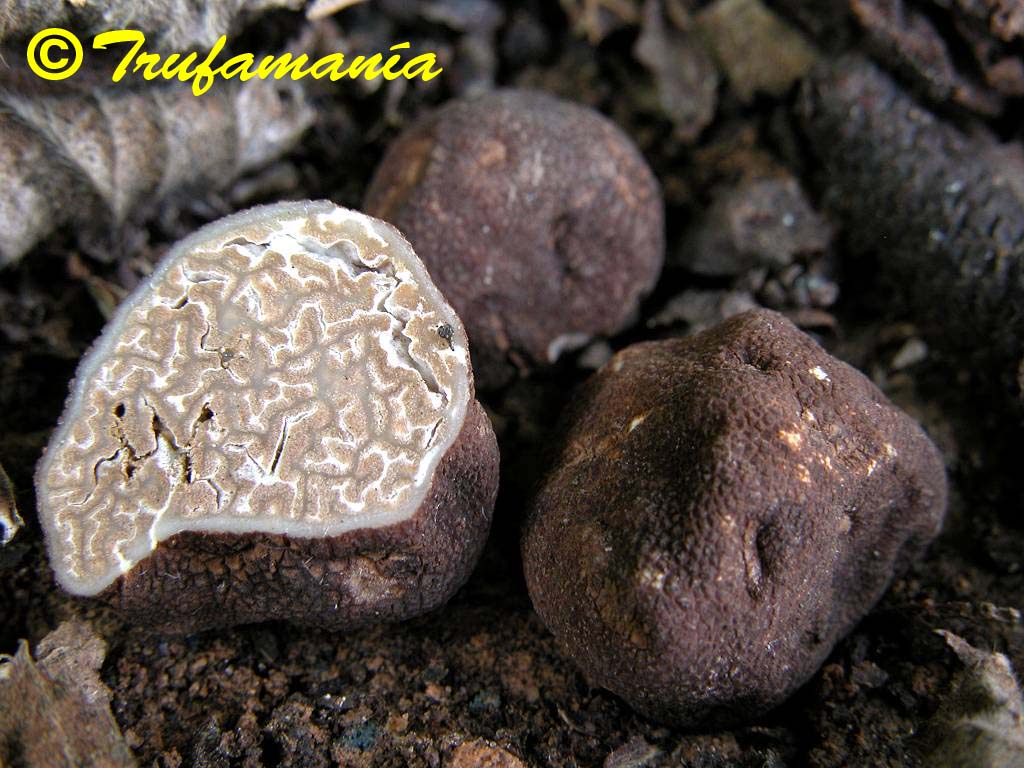
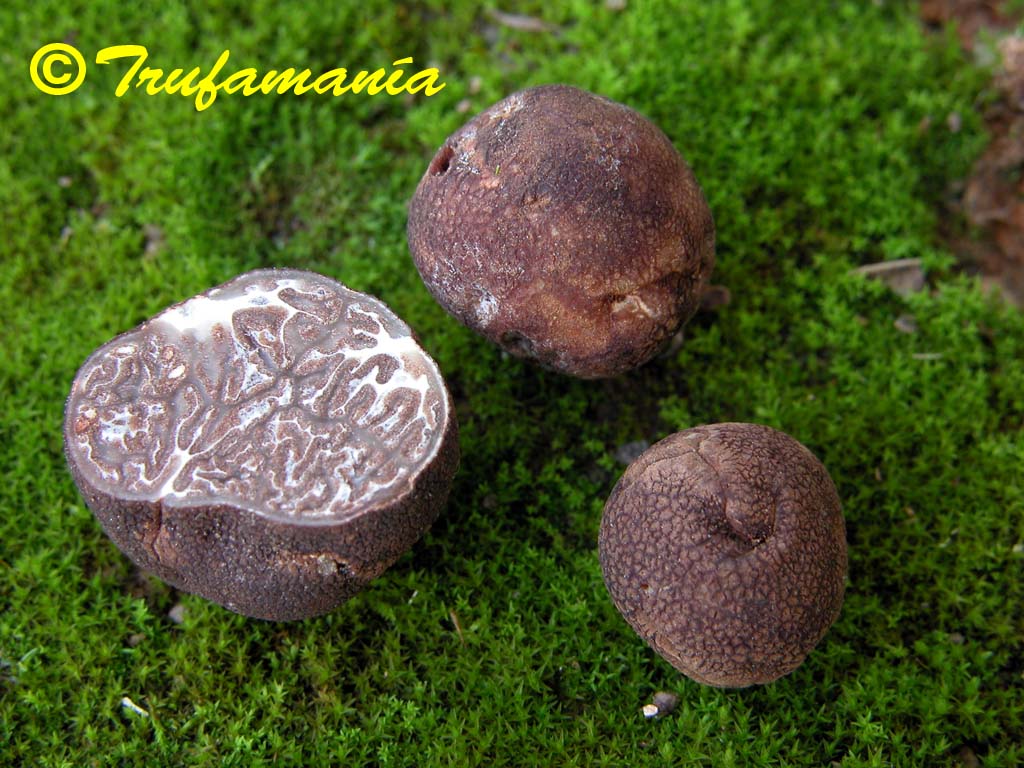
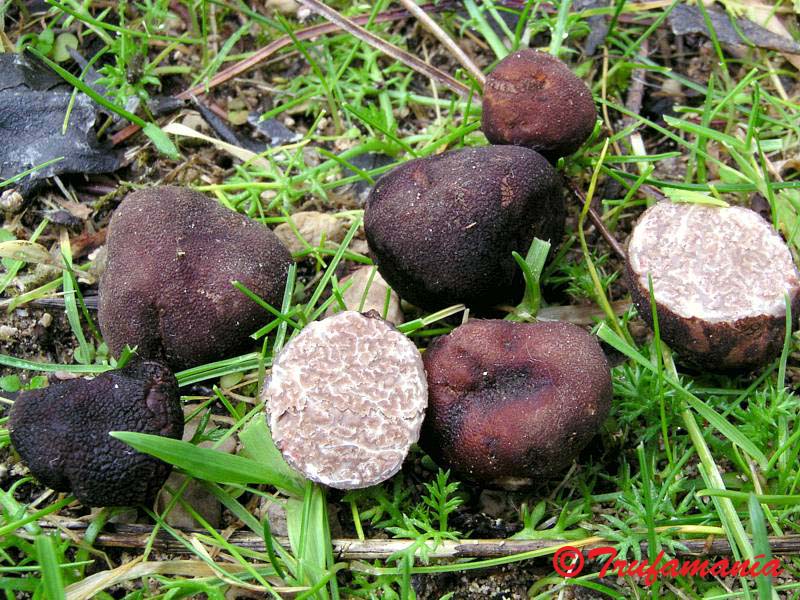
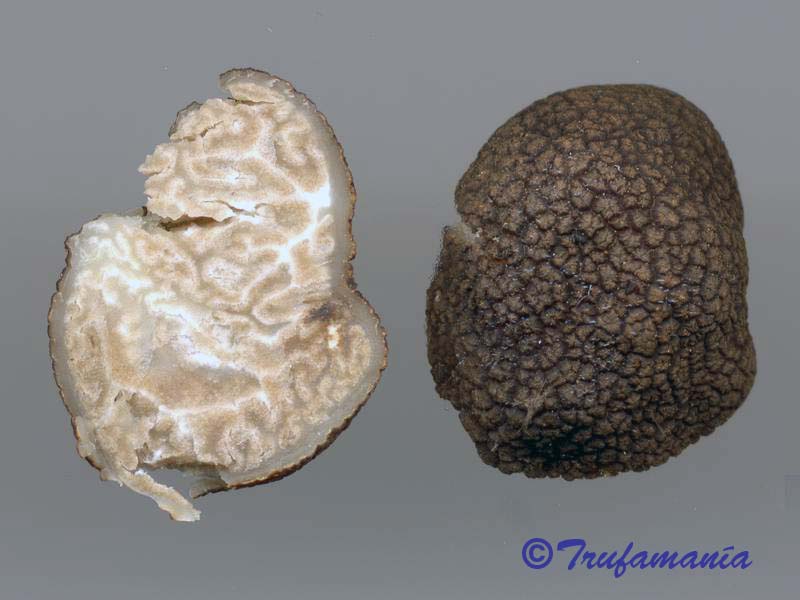
(Click on the picture to see more images)
Synonyms:
Tuberum tertium genus Mattioli (1544), Di Pedacio Dioscoride Anarzabeo sensu Fries (1823)
Tuber rufum Pollini (1816), Plant. Nov. 33 sensu Fries (1823)
Tuber rufum Pollini: Fries (1823), Systema mycologicum 2 Pt. II: 292
Tuber cinereum Tul et C. Tul (1844) Giorn. Bot. Ital. anno 1, 2 (1): 62
Tuber bonneti Roumeguère (1882), Rev. Mycol. 4(14): 76, t. 26 f. 1
Tuber rufum Pico var. oungloun Bonnet in Roumeguère Funghi gallici exsiccati nº 2816
Tuber lucidum Bonnet (1884), Rev. Mycol. 6(23): 139
Tuber caroli Bonnet (1885), Rev. Mycol. 7: 8
Tuber rutilum R Hesse (1894), Die Hypogaeen Deutschlands 2: 13, t. 16 f. 5
Tuber rufum Pico var. rufum forma rufum Montecchi & Lazzari (1993), Atlante Fotografico di Funghi Ipogei (Trento): 191 (1993)
Macroscopic characters:
Ascomata: hypogeous, subglobose or irregular in shape, sometimes with a basal depression, 1–4 cm across, reddish brown, yellow-brown or blackish, areolate or minutely warted. Warts minute, pyramidal, flattened.
Gleba: hard, solid; whitish at first, becoming light brown, dark brown at maturity, marbled with two types of numerous, thin, branching veins: one type dark-coloured and containing no air (venae lymphaticae, veines aquifères of Tulasne, venae internae of Vittadini), the other white and air-bearing (air-veins, veines aérifères, venae externae).
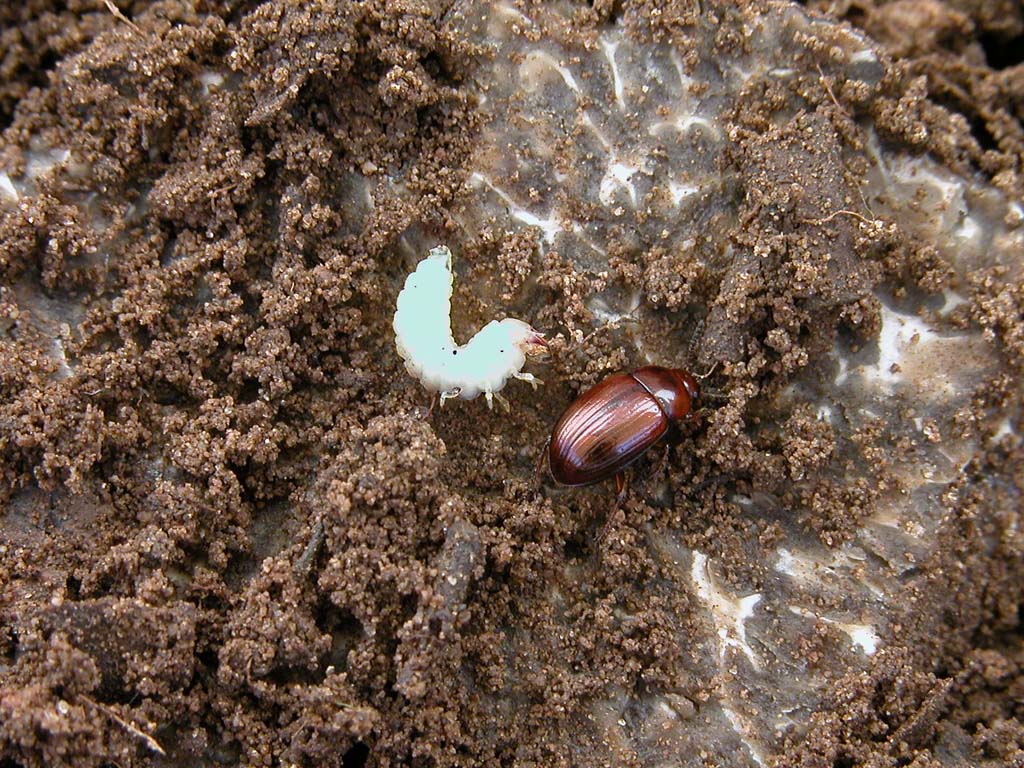
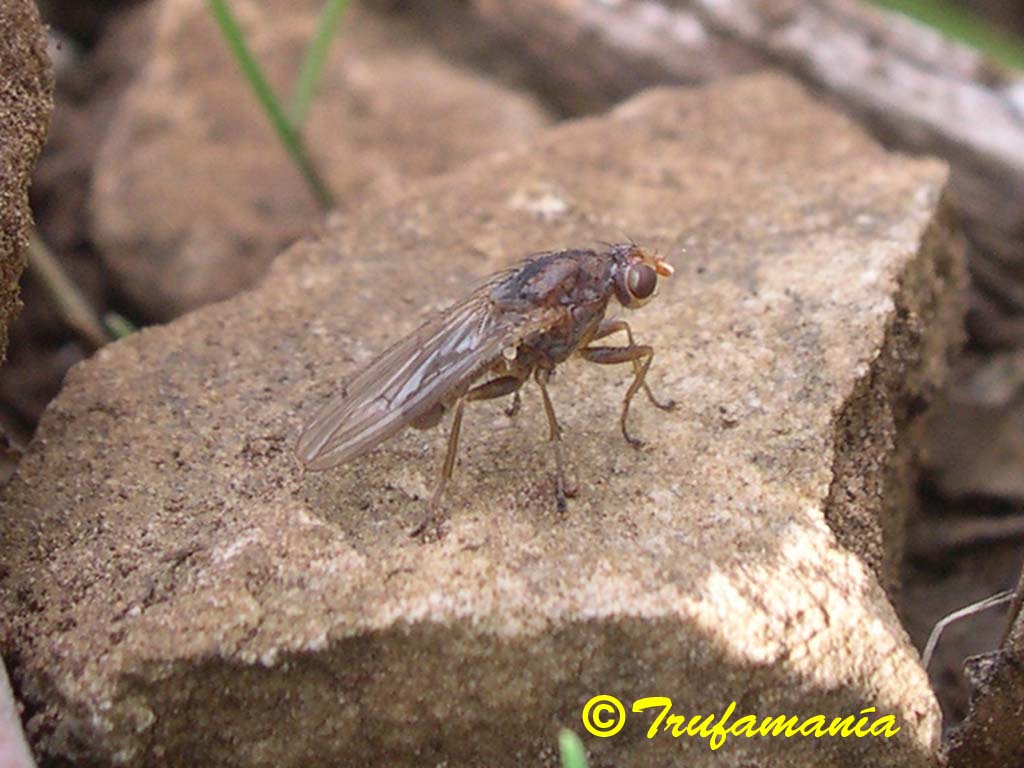
Odour: strong, truffle-like, smoky, sometimes garlicky. Readily detected by truffle dogs, the truffle beetle (Leiodes cinnamomea) and truffle flies (Suillia spp.)
Taste: faint, not very persistent, nutty, somewhat tannic.
Habitat
A widespread species associated with deciduous trees and conifers, ripening in late autumn and winter, though mature specimens can be found year-round. Regularly collected under holm oaks in calcareous soils, in the same habitat as Tuber melanosporum and Tuber aestivum. Frequently found growing beneath thyme.
Notes:
The variability of this species, both in macroscopic appearance and in spore shape and size, has given rise to a large number of varieties and even distinct species.
Tuber ferrugineum Vittadini (=Tuber rufum f. ferrugineum (Vittad.) Montecchi et Lazzari) has a brown, minutely papillose peridium with a soft gleba. Tuber requienii Tul et C. Tul is considered by some authors to be synonymous with Tuber ferrugineum.
Tuber rufum forma lucidum (Bonnet.) Montecchi & Lazzari has a shiny black peridium.
Tuber bonneti Roumeguère, synonymised with or treated as a variety of Tuber rufum, has very small spores (19–22 × 9–12 µm).
Tuber rufum Pico var. nigrum Mattirolo (=Tuber rufum Pico var. oungloun Bonnet, =Tuber rufum Pico f. melanica Cetto) has a black, warted peridium with flattened, pyramidal warts and large, ellipsoid spores up to 45 × 28 µm.

(Click on the picture to see more images)
Microscopic characters:
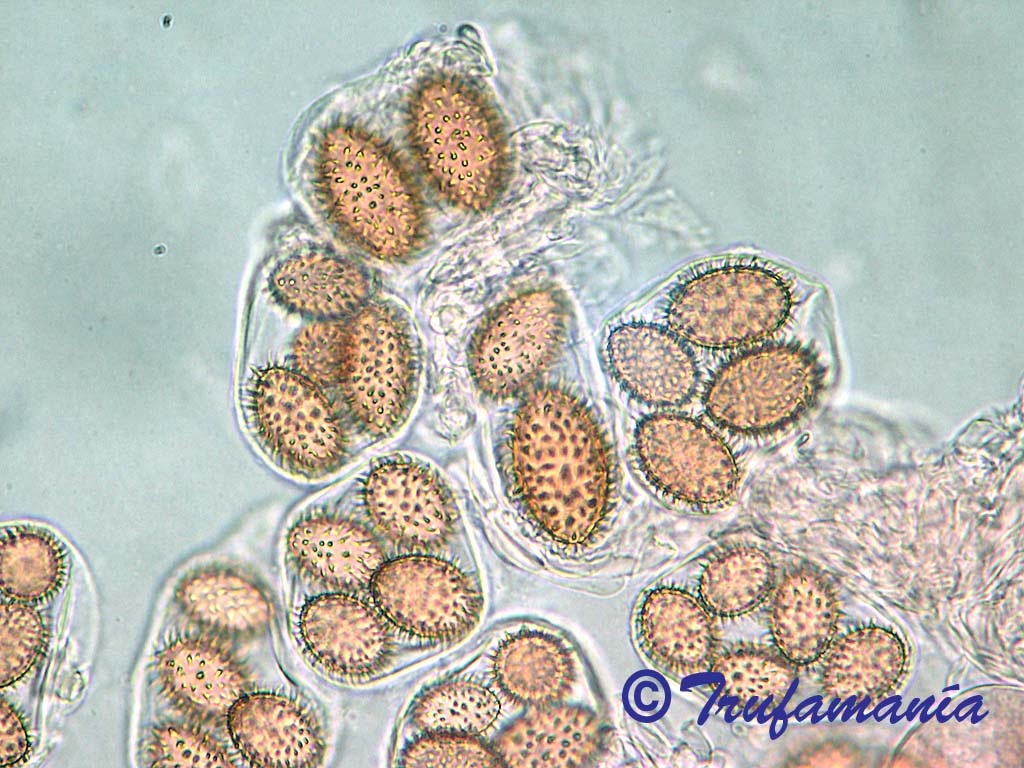
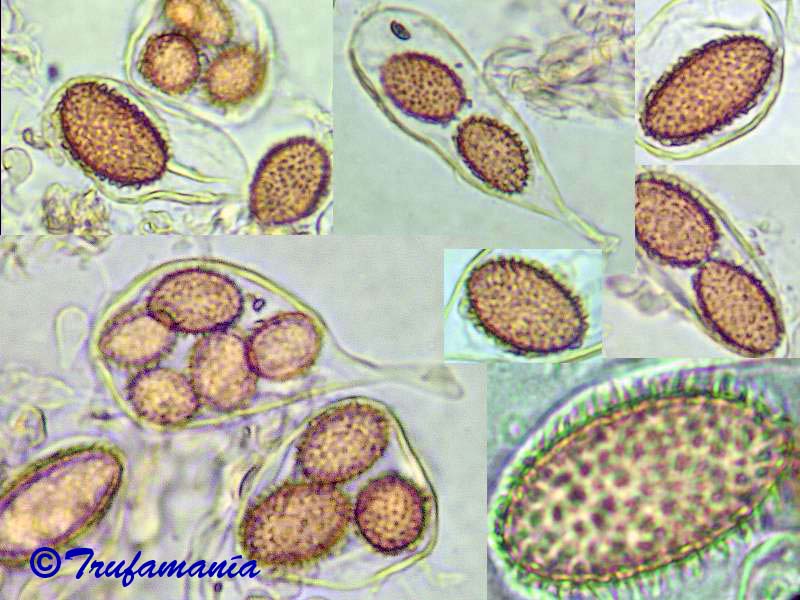
Asci: subglobose to broadly clavate or pyriform, long- or short-stalked, 50–80 × 40–70 µm excluding stalk, 1–4 (–6)-spored (usually 3–4-spored).
Ascospores: 18–29 (–35) × 15–20 (–27) µm excluding ornament, size variable depending on the number of spores per ascus, Q range = 1.15–1.57, broadly ellipsoid to ovate-ellipsoid, ochre-yellow, translucent, ornamented with isolated conical spines 2–4 (–5) µm long.
Peridium: 400–500 µm thick, composed of agglutinated, interwoven hyphae (textura intricata), becoming pseudoparenchymatous towards the surface and forming subglobose, thick-walled cells in a superficial layer up to 50 µm thick.
 |
Antonio Rodríguez trufamania@gmail.com antonio@trufamania.com ORCID iD: 0000-0002-0708-7773 |